Free Delivery & Return
 365-Day Returns
 10 Million Happy Customers
 500,000 Products in Stock

How to choose the right mattress: types, firmness and sizes
Reviewed by the Beliani Content Team · Updated September 2026
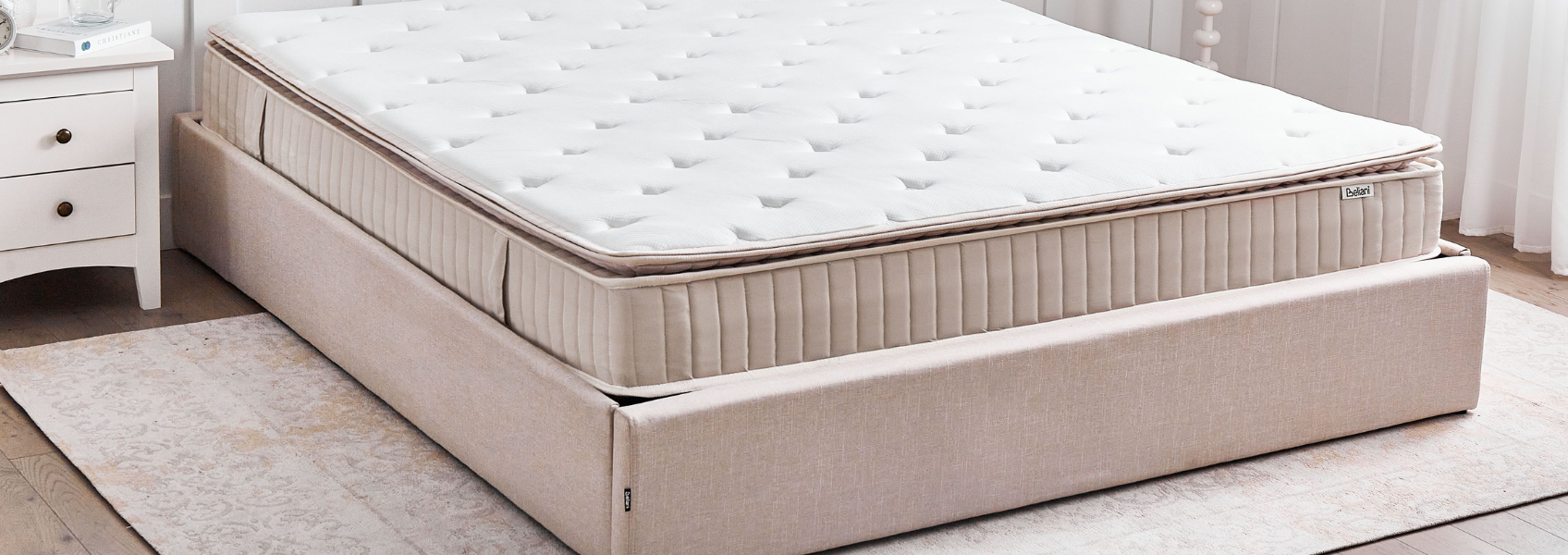
A mattress only earns its price if its type, firmness and size genuinely match how you sleep, your body weight and the bed frame underneath it. Getting these three decisions right affects comfort for years, since a mismatched mattress is expensive and inconvenient to replace early.
How do you choose the right mattress?
Choose a mattress by matching its type, firmness and size to how you sleep, your body weight and your bed frame. Side sleepers generally need more contouring, while back and stomach sleepers usually benefit from firmer support.
Three things to get right
Every good mattress choice comes down to the same three decisions, in this order.
01
Pick the mattress type
Foam, spring, latex, gel or hybrid: each has a different feel, temperature and lifespan. Match it to what matters most to you before anything else.
02
Match firmness to how you sleep
Side, back and stomach sleepers each need a different firmness range to feel properly supported. Body weight shifts that range further.
03
Confirm the size
Check the mattress fits your bed frame and room before deciding anything else, since size rules out options the fastest.
Which mattress type is best?
Every mattress type trades off support, temperature, motion isolation and price differently. Here's how the main constructions compare.
| Type | Firmness range | Cooling | Motion isolation | Typical lifespan | Best for |
|---|---|---|---|---|---|
| Classic foam | Medium | Moderate | Moderate | 6–8 years | Budget-conscious buyers wanting resilient support |
| Memory foam | Medium-soft to medium | Lower (unless gel-infused) | Excellent | 8–10 years | Cushioned comfort, couples, light sleepers |
| Spring / pocket spring | Medium to firm | Excellent | Fair | 7–8 years | Back and stomach sleepers, hot sleepers |
| Latex | Medium to medium-firm | Very good | Very good | 10+ years | Eco-conscious buyers wanting a natural, breathable material |
| Gel-infused | Medium | Very good | Excellent | 8–10 years | Hot sleepers wanting a cooler, cushioned feel |
| Hybrid (springs + foam/latex) | Medium to firm | Very good | Good | 8–10 years | Sleepers who want contouring and bounce together |
Memory foam vs classic foam: what's the difference?
Both are foam mattresses and both offer customised, contouring support, but they don't behave the same way. Memory foam conforms more closely to the body, giving stronger cushioning and motion isolation, which suits couples and anyone wanting a highly personalised feel. Classic foam is more resilient and breathable, with a bouncier response and a generally lower price, at the cost of some of that close contouring.
Memory foam vs latex: which contours better?
Memory foam contours most closely to the body and is the strongest choice for isolating a partner's movement, but it retains more heat unless gel-infused. Latex is more responsive, sleeps cooler and is naturally resistant to dust mites, which suits hot sleepers or anyone wanting a more natural material, even though it doesn't sink in quite as deeply.
What mattress firmness is best for your sleeping position?
Firmness needs change with how you sleep. Here's what each position needs from a mattress.
| Position | Best mattress types | Firmness | Priority |
|---|---|---|---|
| Side sleepers | Memory foam, latex, hybrid | Medium to medium-soft | Even cushioning at the shoulders and hips, for a more level sleeping position |
| Back sleepers | Spring, latex, hybrid | Medium-firm to firm | Minimal sinkage, keeping the back in a more even, level position |
| Stomach sleepers | Spring, hybrid | Medium-firm to firm | Prevents the hips sinking and the lower back arching |
Beyond firmness, each position has its own priority: side sleepers need the mattress to contour closely at the shoulders and hips, back sleepers need minimal sinkage to keep the back in a more even, level position, and stomach sleepers need enough lift to stop the hips dropping and the lower back arching.
Mattress firmness and body weight
Body weight has the clearest effect on which firmness will actually support you, on top of sleeping position. Heavier bodies sink further into any given foam or spring, so they generally need a firmer surface to get the same support a lighter person feels on medium. As a rough guide: under 60kg tends to suit soft to medium, most sleepers up to around 110kg do well on medium, and anyone heavier, or any dedicated stomach sleeper, is usually better on firm.
| Height | < 50 kg | 51 - 60 kg | 61 - 70 kg | 71 - 80 kg | 81 - 90 kg | > 100 kg |
|---|---|---|---|---|---|---|
| 150 - 160 cm | soft | medium | medium | firm | firm | firm |
| 161 - 170 cm | soft | medium | medium | medium | firm | firm |
| 171 - 180 cm | soft | soft | medium | medium | medium | firm |
| 181 - 190 cm | soft | soft | medium | medium | medium | firm |
| 191 - 200 cm | soft | soft | soft | medium | medium | firm |
| > 200 cm | soft | soft | soft | soft | medium | firm |
Still unsure? A double-sided mattress with two firmness levels, one on each side, lets you flip and compare rather than committing to one feel.
What are the standard mattress sizes?
Match the mattress size to your bed frame and room before firmness or type — the wrong dimensions rule out every other choice.
| Size | Dimensions (W x L) | Best for |
|---|---|---|
| Small Single | 80 x 200 cm | Box rooms, bunk beds, children |
| Single | 90 x 200 cm | Single sleepers, guest rooms |
| Small Double | 120 x 200 cm | Single sleepers wanting extra space, smaller rooms for two |
| Double | 140 x 200 cm | Couples, standard-size main bedrooms |
| King | 160 x 200 cm | Couples wanting more shoulder room |
| Super King | 180 x 200 cm | Couples and families sharing a bed |
What is a 7-zone mattress?
A 7-zone mattress divides the sleeping surface into seven areas, each with different firmness, so the head, shoulders, lumbar region, hips and legs each get support suited to that area instead of one uniform feel across the whole bed.
- Targeted firmness at the lower back, neck and shoulders spreads weight more evenly across the body.
- Weight is distributed away from the hips and shoulders for a more even feel across the mattress.
- Support sits where it's needed most, keeping the body in a more even, level position.
- Zoning reduces disturbance from a partner's movement through the night.
- Even weight distribution means less need to shift position during the night.
- The layout suits back, side and stomach sleepers without needing a fully custom build.
Mattress lifespan and maintenance
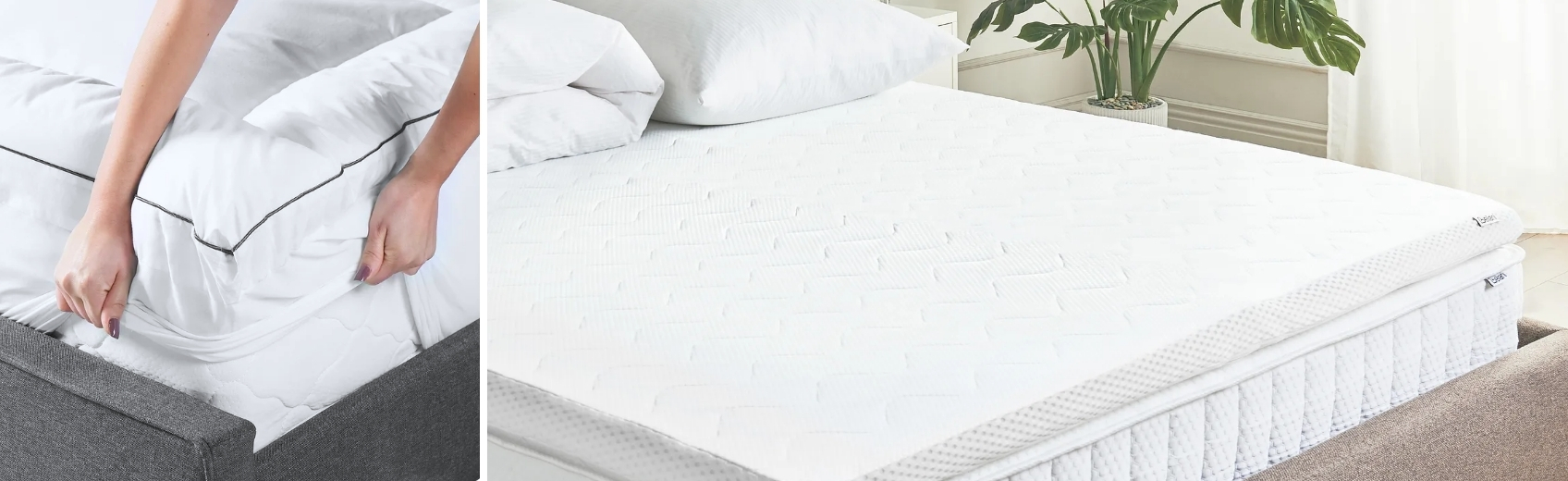
Most mattresses last 7 to 10 years with proper care. Foam and latex sit at the longer end of that range; entry-level spring mattresses often need replacing closer to 6 - 8 years under daily use. Two features worth checking before you buy: handles, which make flipping or rotating easier, and a removable, OEKO-TEX certified cover, which simplifies cleaning.
- Rotate the mattress every 3 to 6 months to wear it evenly and prevent sagging.
- Use a mattress protector to guard against spills, stains and dust mites.
- Vacuum periodically to clear dust, and air it out with open windows when you can.
- Avoid standing or jumping on it, which can damage springs or foam layers permanently.
- Flip a double-sided mattress occasionally for even wear across both sides.
Shop now: mattresses
Accessories that extend a mattress's comfort
Not ready to replace the mattress but want it to feel different tonight? A topper or protector changes the feel and adds protection without a full replacement, and pairing it with the right duvet rounds out the setup.
Shop now: toppers and protectors and duvets and comforters
What to check before buying
Before you commit, run through these checks in order.
- Firmness suited to your main sleeping position and body weight, not just personal preference
- Mattress width and length match your bed frame exactly, with no overhang or gap
- Enough clearance in the room to make the bed and walk around it once the size is chosen
- A removable, OEKO-TEX certified cover if you want easier cleaning
- Handles on the sides for rotating a heavier mattress every few months
- A trial period and warranty length that gives you time to adjust before committing long-term
Frequently asked questions
What mattress firmness works best if you often wake up feeling stiff?
A medium-firm mattress often feels more comfortable if you wake up feeling stiff, since it supports the body without letting the hips and shoulders sink too far. Side sleepers usually prefer something closer to medium, while back and stomach sleepers tend to feel better on medium-firm to firm.
How often should you replace a mattress?
Most mattresses should be replaced every 7 to 10 years. Foam and latex mattresses tend to last toward the higher end of that range, while entry-level spring mattresses may need replacing closer to 6 to 8 years, especially with daily use.
What is the difference between memory foam and latex mattresses?
Memory foam conforms closely to the body and slowly returns to shape, giving strong cushioning and motion isolation but retaining more heat. Latex is more responsive and bouncier, sleeps cooler, and is naturally resistant to dust mites, but doesn't contour quite as closely as memory foam.
What mattress firmness is best for side sleepers?
Side sleepers generally need a medium to medium-soft mattress in memory foam, latex, or hybrid construction. This allows the shoulders and hips to sink slightly while the rest of the body stays supported.
What are 7-zone mattresses good for?
7-zone mattresses divide the surface into seven areas with different firmness levels, giving firmer support under the shoulders and hips and softer support under the legs. They suit most sleeping positions and are a good choice for anyone wanting more targeted support in specific areas without needing a fully custom mattress.
Do heavier people need a firmer mattress?
Generally yes. People over around 110kg tend to sink further into softer surfaces, so a firmer mattress, or one with reinforced support layers, holds its shape better and gives more consistent support over time.