


Vases


Vases
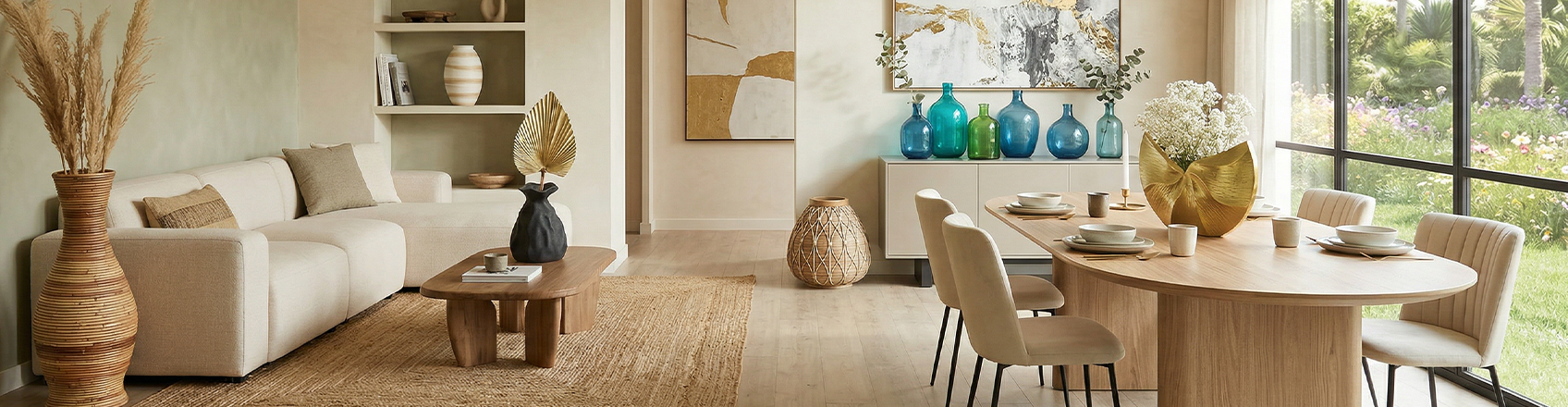
Vases are one of the few home accessories that work brilliantly whether you use them as intended or not. Fill them with fresh flowers when you're feeling fancy, pop in some dried stems when you can't be bothered with water changes, or just leave them empty as sculptural objects on a shelf. A well-chosen vase adds character to a room regardless of what's inside it.
What vase shapes are available?
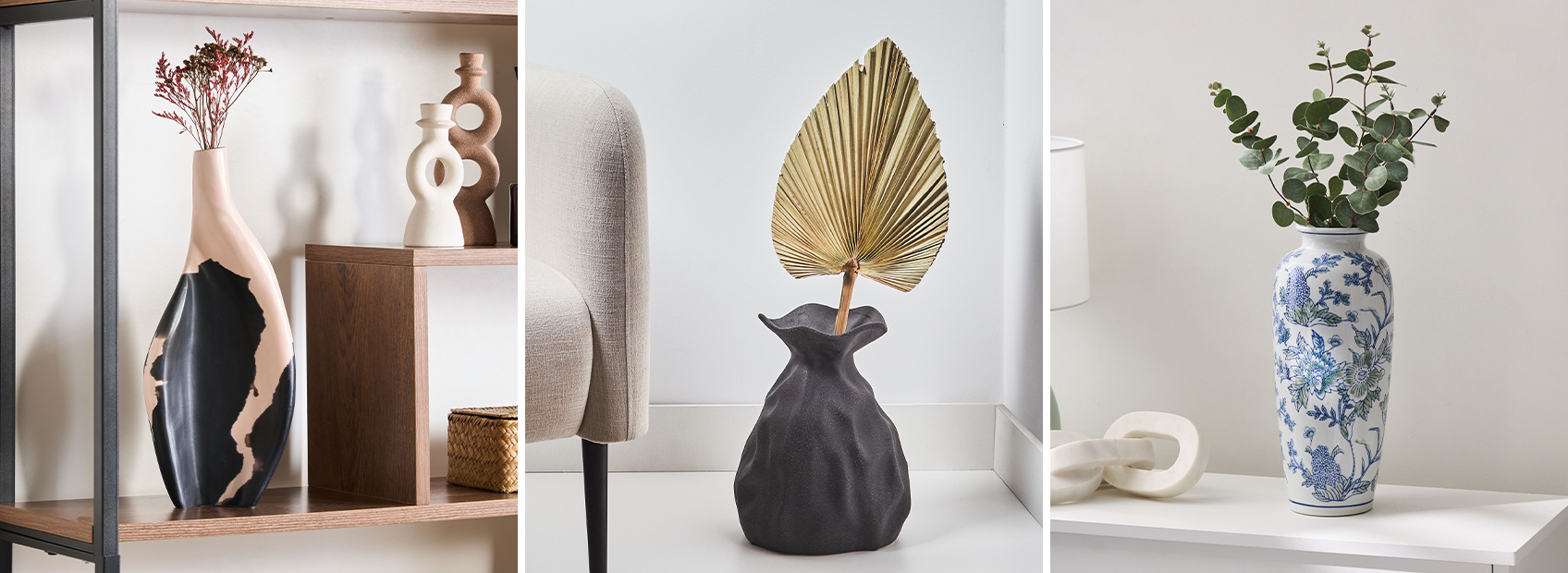
Vase shapes have evolved well beyond the classic flower-holder silhouette. Each shape works differently in a space and suits different types of arrangements:
- Cylinder vases - straightforward and endlessly useful, they work across all interior styles and suit both tall branches and shorter blooms. Particularly good for minimalist or modern spaces where clean lines matter.
- Bottleneck vases - these are brilliant for single-stem displays or small bunches, as the narrow opening does the arranging work for you, holding stems in place without faffing about.
- Round vases - generous, curved forms that feel friendly and approachable. The wider opening suits abundant, loose arrangements or trailing foliage.
- Urn vases - classic shapes with wider mouths and often decorative details. These have a timeless, slightly formal quality that works in elegant settings.
- Abstract vases - asymmetrical, unexpected shapes that function as modern sculpture, they are real conversation starters even when empty.
- Sculpture vases - pieces where the artistic form is clearly the priority, with the vessel function almost secondary. Display them prominently where they can be appreciated as art objects.
- Hollow circle vases - modern designs featuring circular openings or ring-shaped forms. These eye-catching pieces are brilliant for adding visual intrigue to shelves or console tables, and particularly effective when paired with more traditional vase shapes for contrast.
What materials work best for vases?
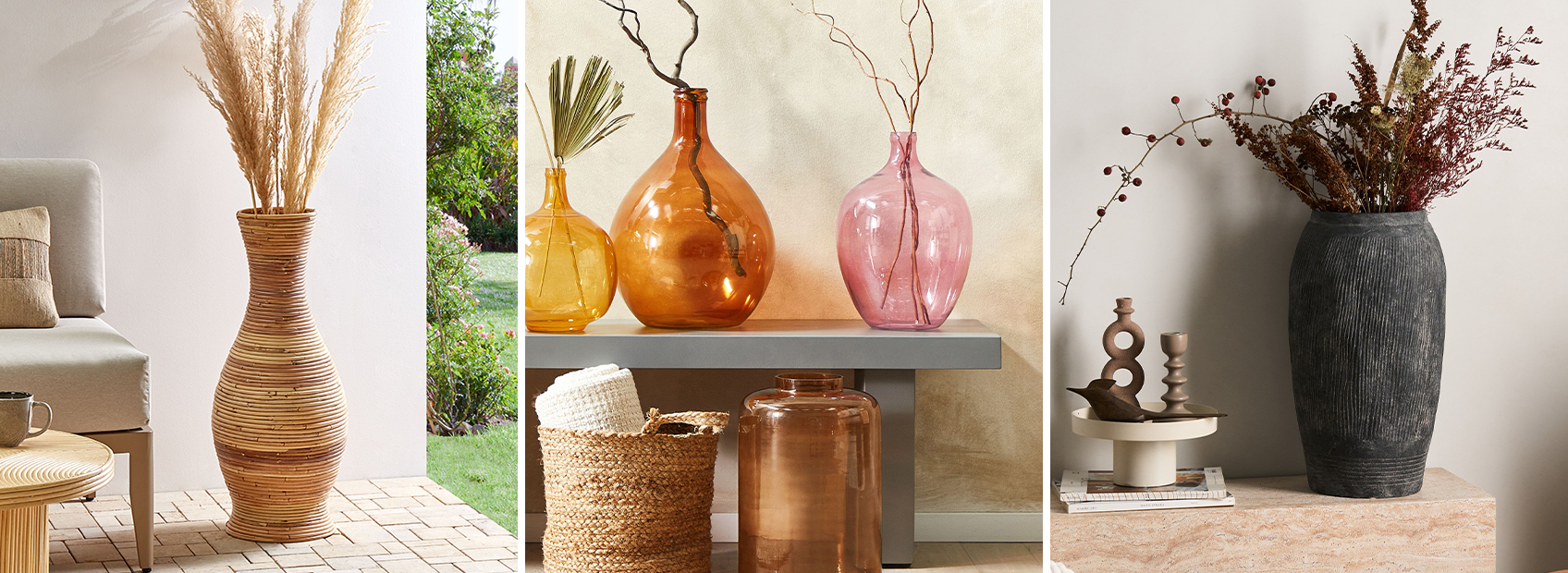
The material affects both the look and the practical use of your vase:
- Glass - the most versatile option. Clear glass shows off flower stems as part of the display, creating a lovely look in clean water. Coloured glass such as amber, green, or blue, adds richness without overwhelming. Glass catches and reflects light beautifully, making even empty vases feel alive.
- Ceramic - offer more personality and texture than glass, and they come in countless colours and finishes. Hand-made ceramics bring warmth and an artisanal quality, feeling more substantial and grounded than glass.
- Terracotta - bring earthy, Mediterranean warmth to a space. The natural clay colour and slightly porous texture create a relaxed, organic feel. They work particularly well in casual arrangements, like wildflowers, dried grasses, and olive branches, rather than formal bouquets.
- Metal - brushed brass, copper, or steel vases add a modern, industrial edge. They work beautifully in contemporary interiors and catch light in interesting ways.
- Stoneware - heavier and more substantial than ceramic, with a raw, textured quality. They suit modern, Scandi, or natural interiors and pair beautifully with organic materials like dried florals or eucalyptus.
Can you display vases without flowers?
Absolutely! What’s more, some of the vases are just decorative pieces that can’t hold water or natural flowers, but those that can are also lovely on their own and deserve to be seen even when you haven’t got fresh flowers to display. To make empty vases work, try to group them in odd numbers: three vases of varying heights create more visual interest than two. Additionally, mixing shapes and materials creates depth. For example, go for a tall cylinder, a round ceramic piece, and a smaller abstract vase. And remember, that if an empty vase feels a bit too minimalist for your taste, artificial plants and flowers are the perfect middle ground.
Shop now: artificial plants and flowers
Where should you display vases?
- Dining tables - even empty vases can anchor a table between meals.
- Console tables and sideboards - perfect for displaying statement vases, especially taller pieces.
- Mantels and shelves - mix vases with other objects, varying heights and shapes for creating visual interest.
- Windowsills - glass vases work particularly beautifully here, catching natural light.
- Coffee tables - smaller, rounder vases work well here without obstructing conversation or taking up too much space.
- Bedside tables - a small vase with a single flower or left empty adds a thoughtful touch.
Whether you're a dedicated fresh-flower person, prefer the ease of dried arrangements, or simply appreciate beautiful objects, there's a vase shape and style that suits how you actually live.